

6 Key Factors to Choose a Power Station Backup Battery for Home

 Key Point 1: Power Capacity – Calculating Your Actual Needs
You know that feeling when your phone dies just as you're about to capture the perfect sunset? Choosing the right power capacity prevents those "I wish I had more juice" moments.
How to calculate your real power needs
Let's break it down simply:
- List every device you'll use (phone, camera, drone, mini-fridge, etc.)
- Find each device's wattage (usually on the charger or manual)
- Estimate daily usage hours per device
- Multiply wattage × hours = Watt-hours (Wh) per device
- Add all device Wh = Your daily total
Pro tip: Always add 20% as a buffer. Weather changes, friends borrow power, and batteries degrade over time. That "500Wh" station might only deliver 400Wh after a year.
Real-world consumption examples
Here's what I've learned from years of testing:
- Smartphone: 5-10Wh per full charge
- DSLR camera: 15-30Wh per charge
- Portable fridge: 50-100Wh per day
- Drone: 50-120Wh per flight session
- LED campsite lights: 5-10Wh per night
A weekend camping trip for two might need 300-500Wh, while a week-long RV adventure could require 1000Wh+.
Key Point 2: Safety Certifications – Non-Negotiables
Would you trust a $5 parachute? Then don't risk your safety with uncertified power gear. Look for these must-have certifications:
Critical safety certifications
- UL Certification: The gold standard for electrical safety (look for UL 2743 specifically for portable power stations)
- CE Marking: Indicates compliance with European safety standards
- FCC Certification: Essential for US market devices
- RoHS Compliance: Ensures no hazardous materials
Protection features that matter
Beyond certifications, verify these protections are included:
- Overcharge Protection: Prevents dangerous battery swelling
- Over-discharge Protection: Stops before complete drain (extends battery life)
- Short Circuit Protection: Automatically cuts power during faults
- Temperature Control: Shuts down in extreme heat/cold
- Surge Protection: Guards against voltage spikes
As one industry expert puts it: "The difference between certified and uncertified isn't just quality – it's potentially life-saving."
Key Point 3: Output Ports – Matching Your Gear
Ever arrived at camp only to realize your power station won't charge your CPAP machine? Port matching is where experience pays off.
AC/DC/USB port selection guide
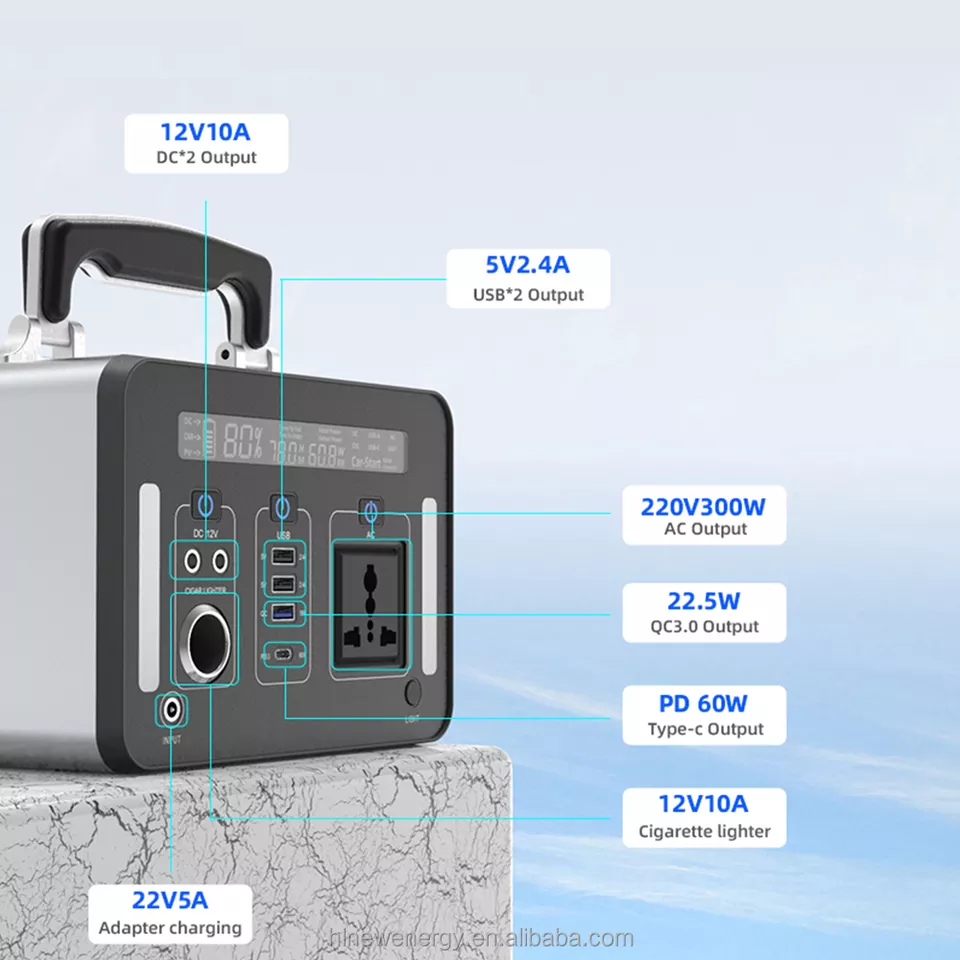
- AC Ports: Essential for laptops, medical devices, kitchen appliances
- DC 5521 Ports: Great for portable fridges, some camping gear
- USB-A: Standard for older phones, lights, speakers
- USB-C PD: Must-have for modern smartphones and laptops (30W+ for fast charging)
- Car Socket: Useful for 12V devices like tire inflators
Special device considerations
Medical equipment users: Verify continuous pure sine wave output for CPAP machines. Photographers: Multiple USB-C ports prevent device rotation. RV users: Look for 30A RV outlet compatibility.
Key Point 4: Charging Options – Flexibility Wins
Imagine being off-grid with no way to recharge. That's why your charging options determine your power freedom.
Charging method comparison| Method | Best For | Full Charge Time (1000Wh) | Ideal Setup |
|--------------|-------------------|---------------------------|-------------| | Wall Outlet | Pre-trip charging | 5-8 hours | Home use | | Car Charger | Road trips | 10-15 hours | Vehicle use | | Solar Panels | Extended off-grid | 6-10 hours (with 200W panels)| Remote locations |
The charging sweet spot
Look for:
- Dual charging (solar + AC simultaneously)
- Fast charging support (some stations charge 80% in 1 hour)
- Solar compatibility (verify max solar input watts)
- Car charging without needing extra adapters
As one camper shared: "My solar-compatible station kept my fridge running for 14 days straight in the backcountry – total game changer!"
Key Point 5: Portability – The Weight vs Capacity Dance
That 2000Wh monster station? Great for your RV, terrible for backpacking. Let's find your balance:
Capacity by activity
- Car Camping: 500-1500Wh (10-30 lbs acceptable)
- RV Travel: 1000-3000Wh (weight matters less)
- Backpacking: 100-300Wh (under 5 lbs critical)
- Emergency Home Backup: 1000-5000Wh (portability secondary)
Weight considerations
New lithium technologies are changing the game:
- 500Wh ≈ 10-15 lbs
- 1000Wh ≈ 20-25 lbs
- 2000Wh ≈ 40-50 lbs
Ask yourself: "Will I actually carry this 1/4 mile from my car to camp?" If not, go smaller.
Key Point 6: Brand & Support – Your Long-Term Safety Net
That "great deal" from an unknown brand? It might cost you more when it fails in year two.
Technical comparison of top brands
- EcoFlow: Lightning-fast charging, excellent app control
- Jackery: Simple interface, reliable performance
- Bluetti: Superior solar input, modular designs
- Goal Zero: Premium build quality, trusted reliability
- Anker: Compact designs, value pricing
Evaluating warranty policies
Look beyond the warranty length:
- Battery coverage (many prorate after 1 year)
- Customer service responsiveness
- Repair center locations
- Parts availability (can you replace just the battery?)
- User community support quality
As one reviewer noted: "My premium brand replaced a 3-year-old unit for free – that's why I'll pay 20% more next time."
Conclusion: Power Your Adventure Wisely
Choosing your outdoor power station isn't about finding the "best" – it's about finding your perfect match. Start with your actual power needs (Key 1), ensure critical safety features (Key 2), match ports to your gear (Key 3), consider your recharging options (Key 4), balance portability with capacity (Key 5), and pick a brand that supports you long-term (Key 6). Get this right, and you'll unlock true power freedom wherever adventure takes you.
